
Meet the Crew - Ronald Vlasblom
Get to know your VHP4Safety colleagues better in our Meet the Crew!
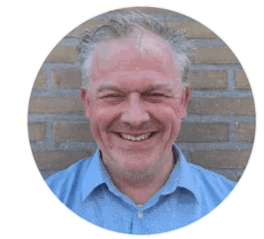
Hi Ronald! Can you tell us a bit about yourself and your background?
Ronald was trained as a medical biologist at the Vrije Universiteit Amsterdam. After graduation, he pursued a PhD in cardiac physiology, where he studied pathological hypertrophy of heart muscle cells. “During my PhD, I first worked extensively with laboratory animals,” he explains. “We used a range of analytical techniques, including MRI and PET imaging, to understand how pathological hypertrophy develops. I always found the link between animal models and molecular techniques fascinating to get a complete picture of the process.”
He continued in postdoctoral research, but when he and his partner started a family, his priorities shifted. “Academic research can be very demanding. I realised I also wanted time and energy for my family.” A career coaching trajectory eventually led him toward education, a path he had never seriously considered before. “At first, I couldn’t imagine moving into education after years in academic research. But I decided to apply, and I got a position as a teacher in physiology, anatomy, operational skills and laboratory animal science at the Utrecht University of Applied Sciences.”
The transition was not immediate. “In the beginning, I struggled a bit,” he admits. “But after completing a didactics course, I started to enjoy it more and more.” He discovered that he particularly valued working with students in the later stages of their programme, when they begin specialising and contributing to real research projects rather than following predefined courses and cookbook laboratory practicals.
Today, Ronald is less involved in day-to-day teaching and more focused on research and programme development. He helped initiate an educational programme on animal-free innovations. “I believe the strength of our programme lies in combining education on animal testing with animal-free approaches. Utrecht is a great place to facilitate this transition, with initiatives such as VHP4Safety and Ombion.” Ombion is the Centre for Animal-Free Biomedical Translation, a National Growth Fund programme which is based in Utrecht since 2025.
What he appreciates most about his current role is the combination of education, research and social interaction. “During my PhD, I often worked alone in the lab. Now, my work is much more social and collaborative, which I really value.”
How do you personally view the transition to animal-free testing, given your background in animal studies?
Ronald sees the transition as nuanced rather than binary. “In vivo studies are still considered the best models in certain situations. If no alternatives are available and the animal model is the most appropriate option, it is essential that these studies are conducted by well-trained professionals.” He notes that accreditation requirements for animal researchers are becoming stricter, similar to continuing education requirements for medical doctors.
At the same time, he believes the field is broader than many realise. “Some researchers who work with in vivo methods are not yet fully aware of the alternatives. The landscape of testing methods is much wider than just animal experiments.” For him, innovation lies in integration. “The combination of in vivo, in vitro and in silico approaches is where real progress happens. If we can embed that perspective in our education, we achieve something truly meaningful.”
You are involved in Work Package 3.3 on training and education. What are you developing there?
Within VHP4Safety, Ronald has worked on developing new educational programmes around animal-free innovation, together with Rinske Drost and Cyrille Krul. Initially, the ambition was to create a full-time Master’s programme. “We were quite far in developing it,” he explains, “but due to financial challenges in higher education, we could not continue.”
A part-time professional Master’s programme was also developed, but attracting sufficient applicants proved difficult. “Despite market analysis showing demand, the number of applicants has been limited. We are currently exploring possible causes. Perhaps a two-year programme is simply too long. Micro-credentials, where individual courses eventually add up to a degree, may be a more flexible alternative.”
One major achievement is the new national minor Innovative Testing in Health & Disease , largely inspired by the philosophies of VHP4Safety and Ombion. “It is an interprofessional minor of 30 ECTS, open to students from different educational backgrounds, including vocational, applied sciences, and research university programmes. Students learn to collaborate across educational backgrounds and understand the role each professional fulfils in practice.” The minor will start in September 2026.
What do you consider key factors for adoption of the Virtual Human Platform?
For Ronald, communication and accessibility are crucial. “We need strong external communication to raise awareness of the platform.” He also emphasises the importance of breaking information into manageable pieces. “People need to understand not only what the tools are, but also why and how they were developed and applied.”
Most importantly, adoption depends on addressing real user needs. “Potential end users should see that the platform helps make risk assessment more efficient. Even if they are not yet familiar with all the tools, they should understand that these methods were developed to support smoother and more informed decision-making.”
And outside of work?
Outside his professional life, Ronald enjoys an active and family-oriented lifestyle. “I used to play football for many years, and now my youngest daughter plays as well.” He has also grown fond of spending time at the horse riding school where his daughters ride. “I just enjoy being with my daughters, with family and friends.”
He spends much of his free time outdoors, hiking, cycling, running and practising hobby photography. “I also love travelling, especially to places where mountains meet the sea. For me, that combination makes the perfect holiday.”