Meet the Crew - Nathalie Dierichs
Get to know your VHP4Safety colleagues better in our Meet the Crew!
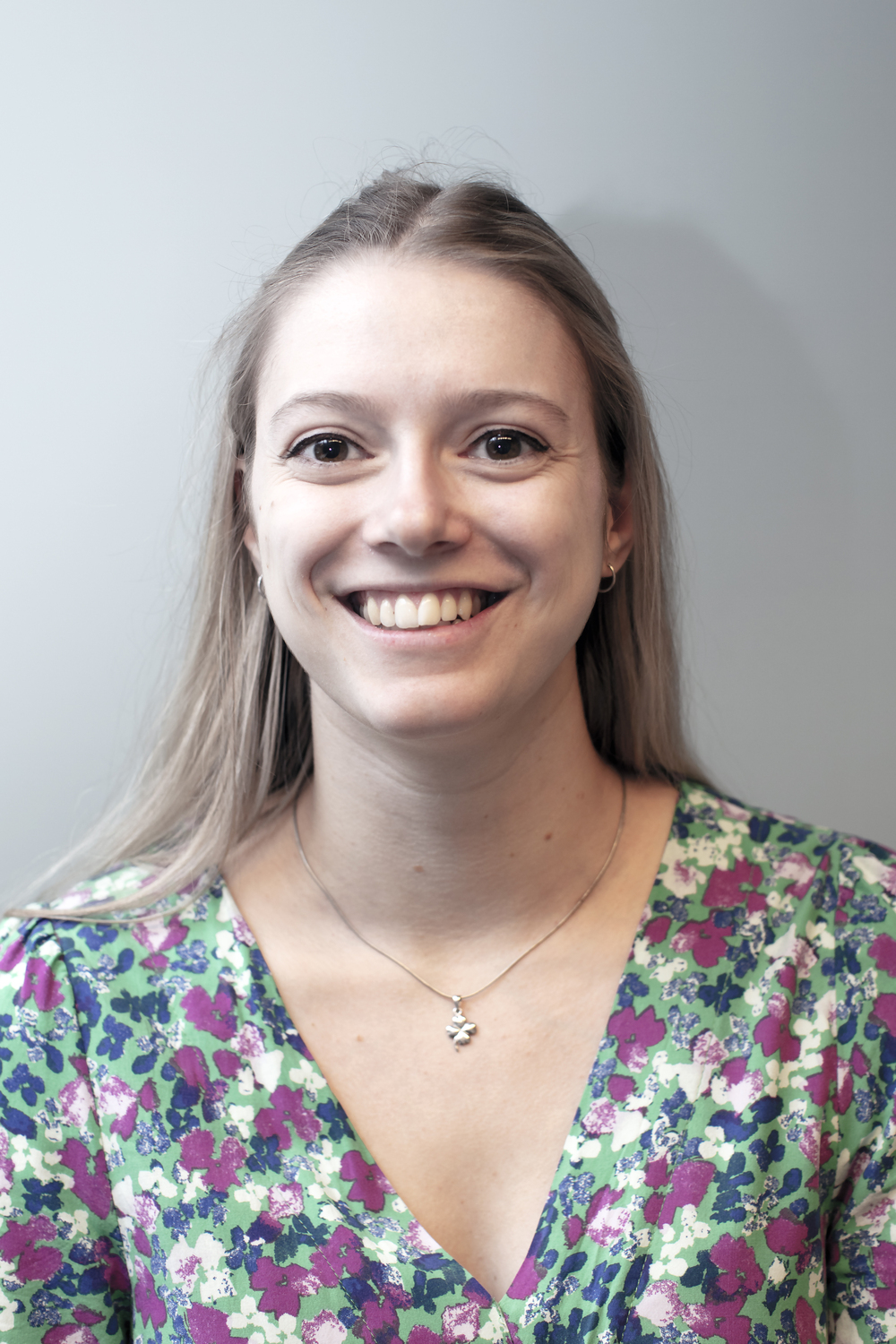
Hi Nathalie! Can you tell us a bit about yourself?
Nathalie is a fourth-year PhD student in the VHP4Safety project. She started at the end of 2021 after completing a bachelor’s in Nutrition & Health and two master’s degrees—Nutrition & Health and Applied Food Safety—at Wageningen University.
“Toxicology first caught my attention during my master’s in Applied Food Safety, and from there, I started specializing in that direction,” she explains.
For her master’s thesis, she worked on developing in vitro models to investigate whether Alzheimer’s disease could partly originate in the gut. “That’s when I realized how fascinating the brain is—especially how it interacts with the rest of the body and how external substances influence its function. I also wanted my research to have real societal impact, and that’s how I ended up at VHP4Safety!”
What is your role in the VHP4Safety project?
Nathalie develops in vitro models that generate data for the platform—a process known as “feeding the platform.” She applies this approach in Work Package 2.4, which examines the effects of thyroid hormone on brain development during pregnancy.
“I do this research at both Erasmus MC and RIVM,” she says. “At Erasmus MC, I focus on the thyroid hormone and study the effects of endocrine-disrupting chemicals (EDCs) at the cellular level. At RIVM, I use a more complex human stem cell model to analyze how EDCs impact processes like neuronal differentiation. Together, these approaches give us a more complete picture of how a substance works and what its mode of action is.”
How do the in vitro models you use at Erasmus MC and RIVM complement each other?
At Erasmus MC, Nathalie works with human brain cell lines from the global biobank ATCC. These immortalized cell lines are used as a representation of real brain cells, making them useful for screening whether endocrine disruptors affect e.g. specific enzymes. “This is a more mechanistic approach,” she explains.
At RIVM, she cultures a more complex neuron-astrocyte network using stem cells. This system allows researchers to examine broader effects beyond individual cells. “We can see if the effects we observe in the Erasmus MC models also appear in this network and whether they impact differentiation. This will help us interpret the combined data from multiple in vitro models, and in the bigger picture of VHP to hopefully bridge the gap between in vitro models and real biological processes in the human body.”
What fascinates you most about studying the role of thyroid hormones in brain development?
“The substances we study are highly relevant to society. Most of them are still in use today, and we get to dive deep into their mechanisms to understand exactly how they function in the human body,” Nathalie explains. “What happens on a molecular level? Do their mechanisms of action work as we expect? That discovery process—unraveling how everything fits together—is what I find most fascinating.”
What are some challenges in studying the effects of chemicals on thyroid hormone balance?
One of the biggest challenges in experimental research is that results don’t always align with expectations. Nathalie recalls a specific issue while setting up models at Erasmus MC: “We found that an enzyme was present in the cells, but we couldn’t measure the expected biochemical conversion. Unexpected results like these mean you have to troubleshoot and optimize the model, which always takes more time than you hope.”
Can you share an exciting breakthrough or result from your research?
Recently, Nathalie tested a particular substance across multiple models at Erasmus MC. The results were striking: “I saw how the effect propagated from the molecular initiating event (MIE) through different biological pathways. It wasn’t just inhibiting uptake—it’s impact was also observed at the metabolism and receptor activation level.”
Even more exciting was seeing the same effect in the complex stem cell model at RIVM. “It’s amazing to watch all these pieces come together into a single, coherent story,” she says.
While she can’t share specifics yet—“The results aren’t published yet, so stay tuned!”—it’s clear that her findings could contribute valuable insights into the mechanisms of thyroid disruption.
What do you see as the main benefits of developing animal-free test methods for neurotoxicity?
Nathalie believes that new approach methodologies (NAMs) are making significant strides in understanding the developmental neurotoxicity (DNT) effects of EDCs. However, she also sees a gap:
“There’s a growing focus on thyroid disruption and NAMs for that, but I sometimes miss the link to developmental neurotoxicity,” she notes. “Many studies look at how chemicals affect the thyroid gland, but we focus on how EDCs affect the thyroid hormones balance in the developing brain. Hopefully, our research will lead to better predictions of DNT.”.
In WP2.4, you’re developing a risk assessment workflow to evaluate the impact of substances on thyroid-regulated brain development. Can you tell us more about that?
Nathalie is working closely with Lianne and Rob, who are leading the risk assessment efforts in Work Package 2.4. In a recent workshop, the team—including partners from Leiden University (Joost and Filippo) and RIVM (Ellen and Nathalie)—collaborated on laying the groundwork for this workflow.
“My research is just one piece of the puzzle,” she explains. “For example, I study whether a substance inhibits thyroid hormone transport in the brain, while another researcher investigates whether the substance even reaches the brain using PBPK models.”
This kind of cross-disciplinary collaboration is essential. “During the first Designathon, we were all working on individual components,” Nathalie says. “Soon, we’ll bring everything together to form the VHP!”
You attended the workshop that was organized for early-stage researchers on making videos about your research. What did you find most valuable?
“The biggest takeaway was learning how to explain my research in simple terms,” she says. “It made me realize how much jargon I use and how much knowledge I’ve gained during my PhD. The coaches’ guidance was also really helpful in making complex topics accessible.”
Next to this, she found the video editing process surprisingly educational.
How do you think communicating your research through videos helps increase awareness and impact?
Nathalie sees video as a powerful tool for reaching a wider audience. “As researchers, we often present at conferences, which are very field-specific. But with video, we can share our work with a much broader audience—people outside our field, policymakers, or even the general public.”
She’s already received positive feedback. “I’ve had great responses from both researchers and friends outside my field, which shows how valuable this approach can be!”
You can find Nathalie's video here.
What do you enjoy doing outside of work to relax and recharge?
When she’s not in the lab, Nathalie loves bouldering. “I climb twice a week—it’s a great way to clear my mind.”
She also enjoys spending time with friends, especially playing board games. “Right now, my favorite game is Paleo, a cooperative board game where you work together to survive challenges like the Ice Age. It’s really a lot of fun!”