
Meet the Crew – Jelle Vriend
Get to know your VHP4Safety colleagues better in our monthly Meet the Crew!
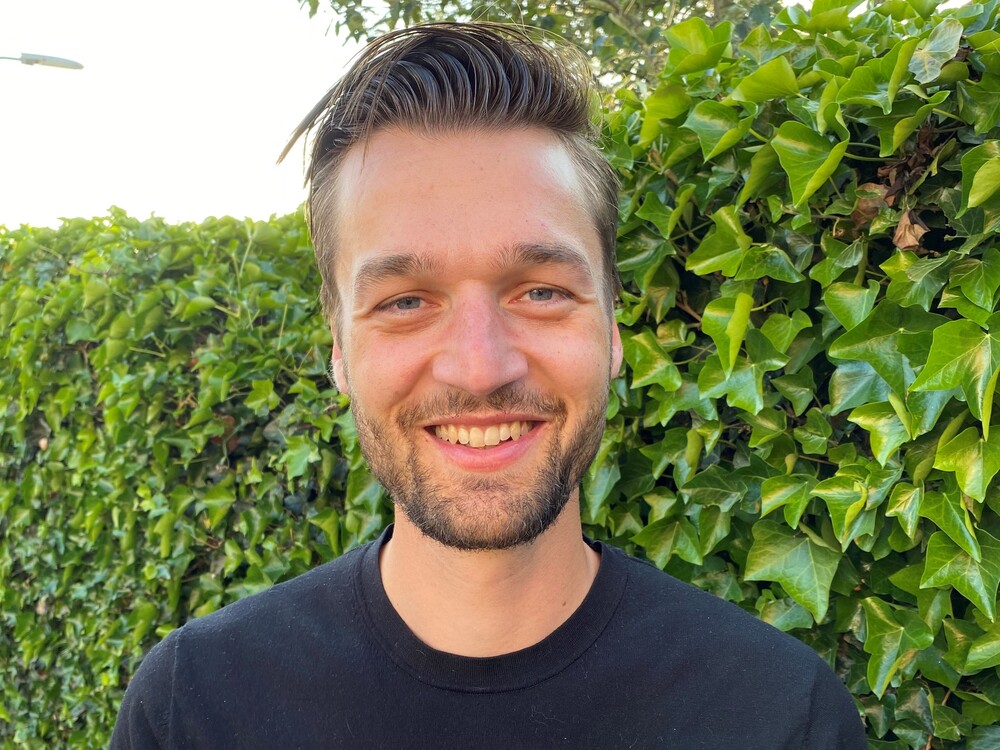
Hi Jelle! Could you tell us a bit about yourself?
My name is Jelle Vriend and I work as a Toxicology Advisor at the Dutch National Institute for Public Health and the Environment (RIVM). I focus mainly on risk and hazard assessment of industrial chemicals. During my PhD, I worked with Roos Masereeuw who is also involved in VHP4Safety, on developing a kidney-on-a-chip for the prediction of drug-induced nephrotoxicity. Following the PhD, I worked in the private sector in the UK, again working on the development of a kidney-on-a-chip. Back in the Netherlands, at RIVM, I am also involved in alternative methods for risk and hazard assessment: new approach methodologies (NAMs) and the 3R principle of replacement, reduction and refinement in animal experimentation.
What is your role within VHP4Safety?
I am mainly involved in RL2, the kidney project. In the kidney project, we will work with three drugs which are known to be nephrotoxic. We are setting up models to predict nephrotoxicity in a patient, using a combination of in vitro models and clinical data. I'm really happy that VHP4Safety allows me the opportunity to continue the work I did during my PhD, but from a slightly different perspective.
I am also partly involved in RL3. At RIVM, I've done an analysis of the current state of NAMs in risk assessment of chemicals. We created a landscape which shows the various stakeholders involved, and the steps needed from development to implementation of a new method in the regulatory framework. We found that so far, the use of NAMs in risk assessment of chemicals is limited. There are a few methodologies available for eye or skin irritation, but so far those are the only methods that are available as in vitro or alternative methods for animal models. The full stakeholder landscape is published on the website of the RIVM and parts of the landscape will be used in the research of RL3.
What needs to change in order for these NAMs to be used more widely?
What's interesting to me is that a lot of time and energy is spent on the development of NAMs, but validation is often neglected. I think there are many reasons for this, but perhaps the main reasons are different agendas and priorities of stakeholders and lack of available funding. Validation may not be the sexiest research to do, but it's really important.
Another interesting insight from the stakeholder analysis work we did is that society is not really involved, and we don’t know why that is the case. We see that drug testing itself is more prominent in the public domain: society is aware of drug testing and has an opinion on it, more so than on the safety assessment of chemicals. If you look at cosmetics for instance, a lot is known about that in the public domain and changes in that field have been made over 10 years ago. Stakeholders we interviewed indicate that for chemical assessment, society is sometimes forgotten. If we want to gain the public's trust in NAMs, we need to change this.
What have you learned in the past year while being involved in VHP4Safety?
Looking back, I think that as a PhD student, I may have been a bit naive about how certain methods could easily replace animal models. Now, having gained more experience and a broader perspective, I understand why we are not able to completely replace animal models with NAMs. There are so many different interests at stake, which makes this field very complex. I'm excited to see our own VHP4Safety project and other major consortia really bringing together all parties across the process from development to implementation of NAMs. VHP4Safety allows us to ask all the questions that need to be answered: what do various stakeholders need for an alternative to be feasible, what are the requirements and limitations, the pros and cons.
How do you explain what you do to people that are not involved in this line of work at all?
I usually tell people I assess the safety of chemicals and explain why that matters by providing well-known examples of cases that got media attention. For instance the workers at a synthetic fiber factory in Dordrecht that worked with dimethylacetamide (DMAc). Pregnant women working in this factory showed increased miscarriages or bore children with malformations. I studied this substance myself at RIVM. We assessed what happened, what the hazards of DMAc are and if we can derive a safe exposure level.
Summer is just around the corner. We've got some summer holiday dilemmas for you!
City trip or hiking holiday?
Both very nice, but in summer I prefer a hiking holiday.
Planned itinerary or spontaneous?
Me and my girlfriend usually go for a planned itinerary.
Hotel or tent?
Hotel.
Seaside or mountains?
I like both, so I prefer destinations with both seaside and mountains.
Far away or closeby ?
This year, for a change we are staying closer to home: the Veluwe is our holiday destination.
← Go back to 'Meet the Crew'