Meet the Crew - Fabian Wagenaars
Get to know your VHP4Safety colleagues better in our Meet the Crew!
Hi Fabian! Can you tell us a bit about yourself?
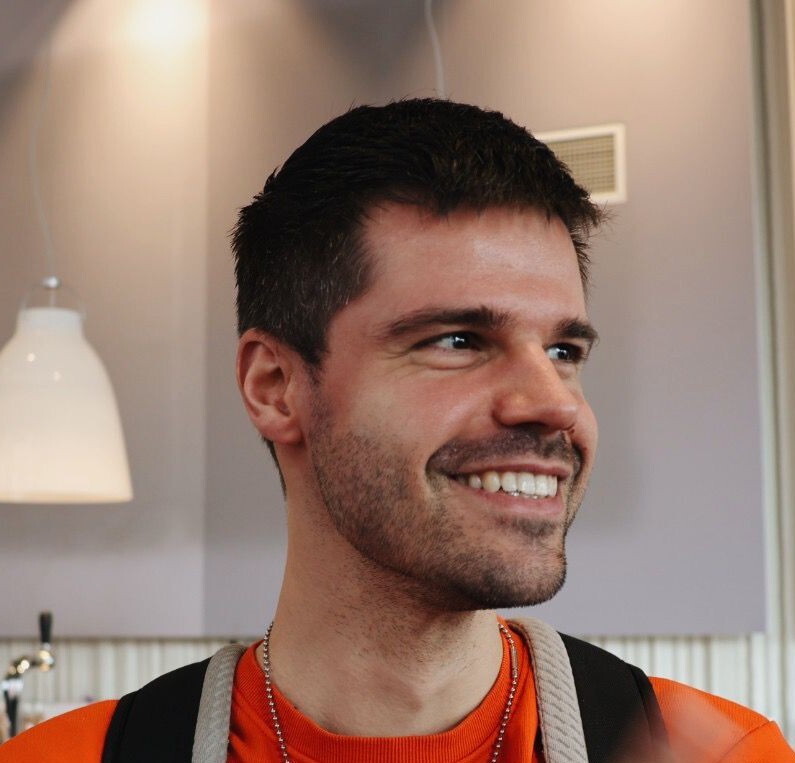
Fabian Wagenaars joined VHP4Safety in April 2025 as a postdoc, bringing with him a strong background in toxicology. "After completing my bachelor’s in Biology, I pursued a master’s in Toxicology & Environmental Health at Utrecht University," he shares. "What drew me to toxicology was its direct societal impact, applying science to solve real-world problems."
His PhD at VU Amsterdam focused on thyroid hormone system disruption. "Basically, how chemicals can interfere with thyroid hormone transport," he explains. Toward the end, he wanted to move into something more applied. "I was looking for positions in risk assessment, not just in vitro research." A project partner recommended VHP4Safety, and it seemed like a perfect fit. "It still involved thyroid disruption, like my PhD, but now with a more societal driven goal: developing risk assessment methods without animal testing."
What drew you towards the VHP4Safety project?
"Two things," Fabian says. "First, I could actually use the data from my PhD in a real risk assessment. Second, I really support the project’s mission: developing a fully NAM-based risk assessment without animal testing. It’s a big challenge, but an important one."
You’re focusing on bridging RL1 (research) and RL2 (regulatory application). What does this "bridging" look like in practice?
"My role is a bit unusual because I’m not fully part of just one research line," he explains. "I started more with RL2, which fits my background, but now I’m also involved with RL1 because they need input from RL2. Basically, I’m keeping both sides updated and making sure they understand each other."
How do you approach translating complex scientific workflows into user-friendly processes on the Virtual Human Platform? What’s the biggest challenge here?
The work Fabian is doing involves integrating models, tools, and datasets into workflows that can answer regulatory questions. "The workflow itself follows a standard risk assessment structure: exposure assessment, internal exposure estimation (often using PBK models), and hazard assessment," he says. "The real innovation is doing this without animal studies, relying instead on in vitro and in silico methods."
The biggest challenge is explaining the reasoning behind specific choices, he states. “Why did we select a specific QSAR model? Why did we use qAOPs? Why focus on these particular key events? The platform doesn’t just outline the steps, it also explains the logic behind them, so users can understand how each component fits into the overall risk assessment process."
What can people expect from the Virtual Human Platform launch event?
Fabian is also deeply involved in organizing the Virtual Human Platform launch on 28 May. "We’ve designed the event to be highly interactive," he says. "We’ll start with a demonstration of the platform, showing how the safety assessment workflows operate. But we really want attendees to work hands-on with the platform, so we’ve organized three workshops, one for each research line."
Fabian is also co-organizing the workshop for RL2 (in vitro research). "We’ll show participants the data we’ve generated, how we’ve integrated it into the platform, and how they can contribute their own data," he explains. "Additionally, we have an info market where developers will demonstrate how their tools and methods can be applied in everyday work."
What’s one thing you hope attendees will take away from the event?
"I hope people see the platform as a repository for the future," Fabian says. "I’d love for the VHP to become a European-wide platform where researchers can share their workflows, tools, datasets, and methods. It’s just the beginning, but if we can make risk assessment more open and transparent, and do it without animal testing, that would be a big step forward."
"The current version of the Virtual Human Platform is just the beginning," he says. "It is a demonstration of what a Virtual Human Platform can look like and how integrated NAM-workflows can be presented. Scaling this to incorporate multiple different NAM-strategies and using this a benchmark for the future risk assessment, it would be a huge step forward for science, regulation, and society as a whole."
What’s your vision for the future of the Virtual Human Platform?
Looking ahead, Fabian envisions a platform that is more automated and interconnected. "Right now, users have to manually select tools and steps," he says. "It would be great to have a fully integrated workflow, where choosing a regulatory question automatically loads the necessary tools in sequence, with the output of one step seamlessly feeding into the next."
He also hopes the platform will grow by incorporating existing datasets. "If we can include data from previous projects, the platform becomes even more powerful and useful for the broader scientific community."
What do you think we can learn from the process of developing the Virtual Human Platform?
"At the Designathon last April, we presented an early, rough version of the platform. It wasn’t polished, but getting feedback at that stage was really valuable. If we had waited until everything was perfect, we might have missed critical insights that shaped the platform’s development."
What makes working in VHP4Safety unique, compared to your PhD research?
"In VHP4Safety, we have a lot of project-wide meetings—Designathons, hackathons, scrum meetings," Fabian says. "It’s very pragmatic and collaborative, which is different from the academic world where you often work alone in your own discipline."
He understands that not everyone might see the value in these meetings right away. "If you’re an in vitro toxicologist without results yet, it might feel like you don’t have much to contribute. But it’s not just about results, metadata is important too, and thinking ahead about how your work can fit into the platform. I think many partners started to see the value in these meetings as the project progressed."
What do you enjoy doing when you’re not working on VHP4Safety?
Outside of work, Fabian unwinds with bouldering. “It’s like solving a puzzle on the wall, constantly trying to find out how to do it while being physically active”, he says. Next to bouldering, he enjoys cycling, and watching sci-fi films. "I love how sci-fi explores human dilemmas in imaginative settings," he shares. "I also enjoy exploring scientific subjects. I follow YouTube channels on topics like astronomy, with questions like whether we’ll ever travel beyond the Milky Way. Also, did you know that water is technically lava?"
Explore the Virtual Human Platform: VHP4Safety
Register here for the launch event: Registration Virtual Human Platform Launch